
Learning how to make money on Amazon starts with understanding one key thing: Amazon isn't a single business model. It's a platform with multiple ways to earn, each suited to different skills, budgets and time commitments.
This beginner guide explains the main ways people actually make money on Amazon, how each works, and where online arbitrage and ArbiSource fit in.
What to Expect When Starting on Amazon
Making money on Amazon is realistic, but it is not instant or passive.
Most beginners experience a short learning curve while they understand Amazon fees, product restrictions, and what profitable sourcing actually looks like. The first goal is not replacing an income, but proving the model works with small, repeatable wins.
Why Amazon Is a Popular Way to Make Money Online
Amazon remains one of the easiest platforms to enter because it removes many of the hardest operational parts of online business.
Amazon offers:
- Massive built-in customer demand
- Trusted checkout and buyer confidence
- Fulfilment, shipping, and customer service handled for you
- Multiple income models under one ecosystem
Unlike running your own ecommerce store, you don't need to drive traffic or build trust from scratch. Many successful sellers focus purely on sourcing and execution, not marketing.
What You Need Before Making Money on Amazon
What you need to get started depends on how you plan to make money on Amazon.
If you are selling physical products, including online arbitrage, Amazon-to-Amazon flips, wholesale, private label, or handmade, you will need an Amazon Seller Central account.
There are two account types:
- Individual – no monthly fee, but higher per-sale costs
- Professional – monthly fee, required for FBA and serious scaling
Most sellers aiming to build a real business choose a Professional account early to avoid limitations.
Amazon will also require identity verification, bank details, and basic tax information before you can sell. These steps are standard and are designed to protect buyers and the marketplace.
If you are earning through affiliate commissions, content creation, or Amazon services, Seller Central is not required. These methods use separate Amazon programs and have different setup processes.
Ways to Make Money on Amazon
People make money on Amazon in four main ways:
- Selling products (private label, wholesale, retail or online arbitrage, handmade)
- Creating digital products (Kindle ebooks, low-content books, Merch on Demand designs)
- Earning commissions (Amazon Associates and Influencer Program)
- Providing services or labour (Amazon Flex, Mechanical Turk, Amazon jobs, Amazon Services)
The most scalable methods typically involve selling physical products using Fulfilled by Amazon (FBA), while lower-risk options focus on content, commissions, or gig-based work.
Comparing the Main Ways to Make Money on Amazon
| Method | Capital Required | Risk Level | Scalability | Beginner Friendly |
|---|---|---|---|---|
| Online Arbitrage | Low | Low–Medium | High | ✅ Very |
| Amazon-to-Amazon Flips | Low | Medium | Medium | ✅ |
| Wholesale | Medium–High | Medium | High | ⚠️ |
| Private Label | High | High | Very High | ❌ |
| Affiliates | Low | Low | Medium | ⚠️ |
| Digital Products | Low | Low | Medium | ⚠️ |
| Gig / Services | None | Low | Low | ✅ |
Below is a closer look at each method, how it works in practice, and who it is best suited for.
Main Ways to Make Money on Amazon
1) Selling Products on Amazon (FBA)
Selling physical products is the most common and scalable route. Also what most people know Amazon for.
Most beginners use FBA through online arbitrage or wholesale rather than launching a branded product.
With Fulfilled by Amazon (FBA), Amazon stores, packs, ships, and handles customer service for your products.
Pros
- Higher conversion rates
- Easier to scale
Cons
- Fees can be complex
- Storage and long-term holding fees apply
Learn more:
sell.amazon.com/fulfillment-by-amazon
2) Online Arbitrage (Most Beginner-Friendly)
Online arbitrage means buying products from online retailers and reselling them on Amazon for a profit.
Why beginners like online arbitrage
- Low barrier to entry
- No branding or manufacturing
- Can start with small test buys
- Scales with better sourcing systems
The biggest challenge is finding profitable products consistently and quickly.
Learn more about finding products for online arbitrage or compare online arbitrage and wholesale to understand which model fits your goals. You can also explore the differences between online arbitrage and retail arbitrage.
3) Amazon-to-Amazon Flips (A2A)
A2A flips involve sourcing products directly from Amazon listings and reselling them on Amazon.
Why sellers use A2A
- Familiar sourcing environment entirely within Amazon
- Clear pricing history and sales data for quick, confident decisions
- Often higher margins than online arbitrage during temporary price drops
- Lower competition due to short-lived pricing mistakes that disappear quickly
- Fewer IP and authenticity issues, as Amazon invoices can be used as evidence
- Fast-moving opportunities where speed and accurate filtering are critical
Margins are tighter, so speed and accurate filtering are critical.
Learn more about Amazon-to-Amazon flips in our comprehensive guide.
4) Wholesale
Wholesale involves buying branded products in bulk from manufacturers or distributors and reselling them.
Pros
- Stable supply
- Easier replenishment
Cons
- Higher upfront costs
- Managing relationships with distributors and wholesalers
Many sellers move from arbitrage into wholesale as they scale.
Learn more:
www.helium10.com/blog/amazon-wholesale
5) Private Label
Private label involves creating your own branded version of an existing product and selling it via FBA.
- Used by ~54% of Amazon sellers
- Higher upside, higher risk
- Requires branding, sourcing, and listing optimisation
Best suited to sellers with capital and patience.
Learn more:
www.junglescout.com/resources/articles/private-label-amazon
6) Handmade
Sell handcrafted goods through Amazon Handmade.
- Lower competition
- Strong margins for unique items
- Limited scalability
Learn more:
sell.amazon.com/programs/handmade
Making Money on Amazon Without Selling Products
Kindle Direct Publishing (KDP)
Publish ebooks or low-content books such as journals and planners.
- No inventory
- Scales with volume and niche selection
- Competitive but still popular
Learn more:
kdp.amazon.com
Amazon Merch on Demand
Upload designs for apparel and accessories. Amazon handles production and fulfilment.
- Royalties typically 13–37%
- No inventory risk
Learn more:
merch.amazon.com
Amazon Associates & Influencer Program
Earn commission by promoting Amazon products via blogs, social media, or video.
- Requires traffic or audience
- Commission rates vary by category
Learn more:
affiliate-program.amazon.com
affiliate-program.amazon.com/influencers
Can You Actually Make Money on Amazon?
This is usually the first question people ask once they get past the hype.
If you search Reddit or seller forums, you'll see a lot of mixed opinions. Some people say Amazon is "too saturated." Others quietly post that it's still working for them. The difference is rarely luck, it's how sellers approach the business.
The people who struggle tend to rely on manual searching, guesswork, or one-off deals. The sellers who keep going usually talk about systems: understanding fees, validating demand, and repeating what already works instead of constantly chasing new ideas.
Arbitrage comes up again and again as a common entry point because it allows sellers to learn how Amazon actually works without taking big risks upfront. From there, scaling becomes less about finding the perfect product and more about building a process that can be repeated.
If you want a realistic snapshot of how sellers think about this today, this community discussion is worth reading on Reddit.
Which Method Is Best for Beginners?
For most beginners looking for a practical, repeatable business, online arbitrage with FBA is the most accessible option.
- Focuses on sourcing, not marketing
- Lower upfront capital
- Skills transfer into wholesale
- Software replaces manual effort
This is where ArbiSource is designed to help.
Source Deals Like A Pro
7 Day Free Trial
How Long Does It Take to Make Money on Amazon?
Amazon selling is not passive, but it becomes more efficient over time.
Early stages involve:
- Learning how fees, ROI, and restrictions work
- Understanding what a good product actually looks like
- Building sourcing confidence
As systems improve, effort shifts away from manual searching and towards decision-making. Sellers using data-driven tools typically progress faster because they spend less time guessing and more time validating.
The goal is not to work harder, it is to remove unnecessary work.
How ArbiSource Helps You Make Money on Amazon
ArbiSource supports:
- Online Arbitrage
- Amazon-to-Amazon flips
- Wholesale-style sourcing
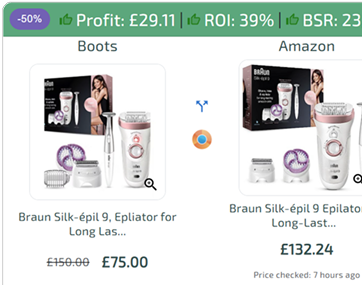
Find profitable products faster
Scan retailers and Amazon data at scale.
Reduce guesswork
Filter by ROI, margin, fees, and demand before buying.
Scale what works
Identify replenishables and repeatable opportunities.
Stay competitive
Custom and private scans uncover deals others miss.
A Simple Beginner Path Using ArbiSource
- Start with online arbitrage
- Generate large product lists with ArbiSource
- Filter aggressively for profit and demand
- Test with small quantities
- Build replenishables and expand into wholesale
This approach prioritises learning, cash flow, and scalability.
Source Deals Like A Pro
7 Day Free Trial
FAQs
Is it realistic to make money on Amazon as a beginner?
Yes, but success comes from systems and data rather than manual searching.
How much money do I need to start?
Arbitrage typically requires far less capital than private label or wholesale.
Is selling better than affiliate marketing?
Selling offers more control and upside. Affiliates rely heavily on traffic.
Can I combine multiple methods?
Yes. Many sellers use OA for cash flow, A2A for speed, and wholesale for stability.
A Note on Tax and VAT (UK Sellers)
If you are selling on Amazon in the UK, profits are taxable and may be subject to VAT depending on turnover and business structure.
Many beginners start small and handle tax reporting simply, then move to professional accounting support as they scale. Amazon provides transaction records, but sellers are responsible for understanding their obligations.